Podcast and Video Subtitles That Viewers Actually Finish.
02 January, 2026· Article by Maria Jones


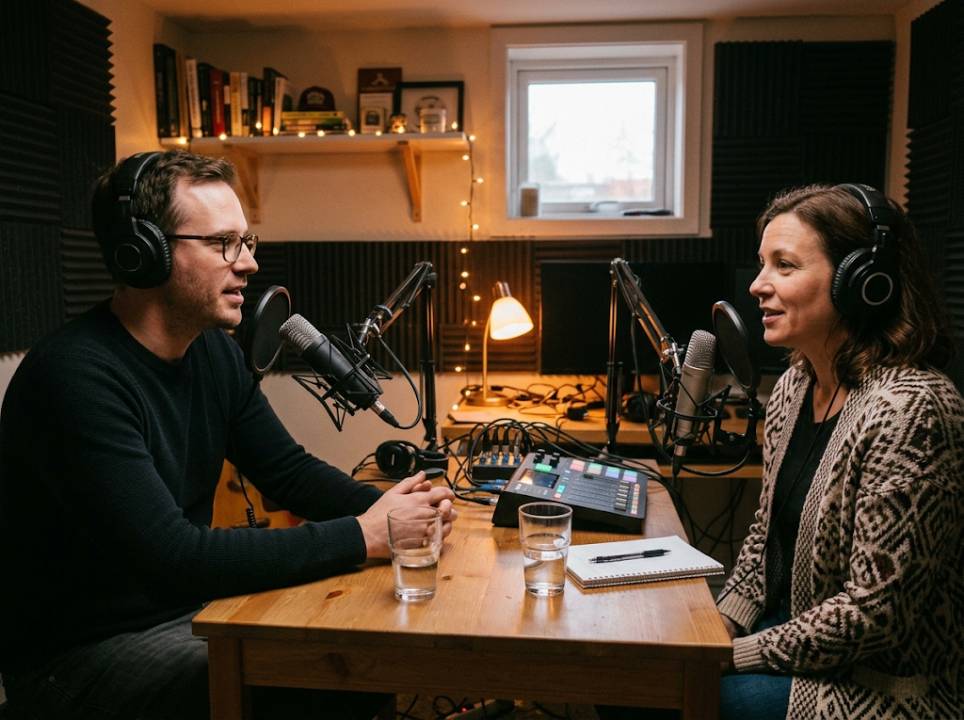
More than half of online video is watched without sound, on trains, in offices and in waiting rooms. Podcasts moved to video for the same reason, and listeners now expect to read along. Good subtitles turn a recording into content that works in every setting. Poor ones push viewers away within seconds.
This article explains how to prepare podcasts and videos so that transcripts and subtitles are accurate, readable and ready for several languages.
Start with a clean recording
Accuracy begins at the microphone. Background noise, overlapping voices and echo force a transcriber to guess, and guesses become errors. Record in a quiet room, give each speaker a microphone and ask guests to avoid talking over one another.
Keep a short list of names, brand terms and technical words that will come up. Sending it with the file removes most spelling doubts.
Transcript first, subtitles second
A reliable workflow starts with a full transcript. It records who said what, keeps the timing and flags unclear passages. Subtitles are then cut from the transcript to fit the screen, which is faster and more accurate than writing them from scratch. Our guide to transcribing audio and video recordings accurately covers this step in more detail.
Rules that make subtitles readable
Viewers read quickly but not instantly. A subtitle should stay on screen long enough to read, usually between one and six seconds. Each line should hold around forty characters, and no more than two lines should appear at once.
Break lines at natural pauses and keep phrases together. Splitting an adjective from its noun or a verb from its object makes reading harder.
Speed and condensing
People speak faster than they read. When speech is rapid, the subtitle should condense without losing meaning, dropping fillers and repetitions while keeping the sense and the tone. Verbatim subtitles are sometimes required for legal or research use, so decide the style in advance.
Sound cues and speaker labels
For deaf and hard-of-hearing viewers, subtitles should include speaker names when the speaker is off screen and short descriptions of important sounds. The W3C publishes clear guidance in its Web Accessibility Initiative pages, and following it helps both users and search engines.
Translating subtitles
Subtitle translation is more than word replacement. Text length changes between languages, so the translator must rewrite lines to fit the same time slot. Jokes, idioms and cultural references may need replacing. Professional subtitling services combine transcription, timing and translation in one workflow, which keeps the result consistent.
Names, numbers and terms
Check names of people, places and products, and write numbers consistently. A single wrong figure in a financial interview can change its meaning. Keep a glossary for recurring terms and share it with every translator.
Technical formats
Subtitles are delivered as files such as SRT or VTT, or burned into the video. Platforms differ: some accept uploaded files, others require them to be embedded. Ask which format your platform needs before work starts, so you avoid a second round of conversions.
Quality checks
Watch the whole video with the subtitles on, ideally with a second person who did not work on the file. Look for timing drift, overlapping lines, missing words and spelling slips. Check the first and last subtitles, because errors often hide there.
Podcasts and written content
A good transcript is more than accessibility. It can become a blog post, a newsletter or a set of quotes for social media. Search engines also read transcripts, so the content of your episode can be found by people who search for its topics.
Accessibility and the law
In many countries, public bodies and large companies must offer captions for video content. Even where it is not required, captions widen the audience to include people with hearing loss, non-native speakers and viewers in noisy places. Treat subtitles as part of the product, not an optional extra.
Multilingual releases
If you plan to publish in several languages, build the transcript in the source language first and translate from it. A single approved transcript keeps every language version in step, so a correction made once reaches all of them, and it saves both money and review time.
Branding and style
Choose a consistent font, size and position for burned-in subtitles, and keep a style note for names, punctuation and numbers. Consistency makes the video look professional and helps any new translator pick up the work without guessing.
Costs and timing
Prices depend on audio quality, the number of speakers and the language pair. Clean recordings are cheaper and faster. Express delivery costs more, so plan subtitles into the production schedule rather than at the end.
Common mistakes
Typical mistakes include relying only on automatic captions, skipping review, ignoring line length and forgetting to translate on-screen text. Each makes the video harder to follow and weakens trust.
Final thoughts
Accurate subtitles and transcripts make podcasts and videos accessible, searchable and ready for new markets. Start with clear audio, work from a transcript, follow reading-speed rules and review the result, and your audience will stay to the end.
Recent Posts
Voice Over Services For Audio ...

Traduzione Audio Per Video Azi...
Traduzione Italiano Arabo Per ...

Traducción Para Empresas Con ...

Traducción Jurada Para Trámi...

Gedolmetschte Interviews richt...
Share it.

We use cookies
We use cookies to give you the best online experience, remember your preferences, and understand how the site is used. You can accept all cookies, reject optional ones, or choose which categories to allow.
Privacy PolicyCookie preferences
Choose which cookies we can use. Necessary cookies stay on because the site cannot work without them.
For more details, read our Privacy Policy.